

Remembering Ace Frehley
Larry DiMarzio talks with Ace's tech, Rocco Monterosso,
recalling Ace's gear, his early embrace of DiMarzio pickups, and much more.
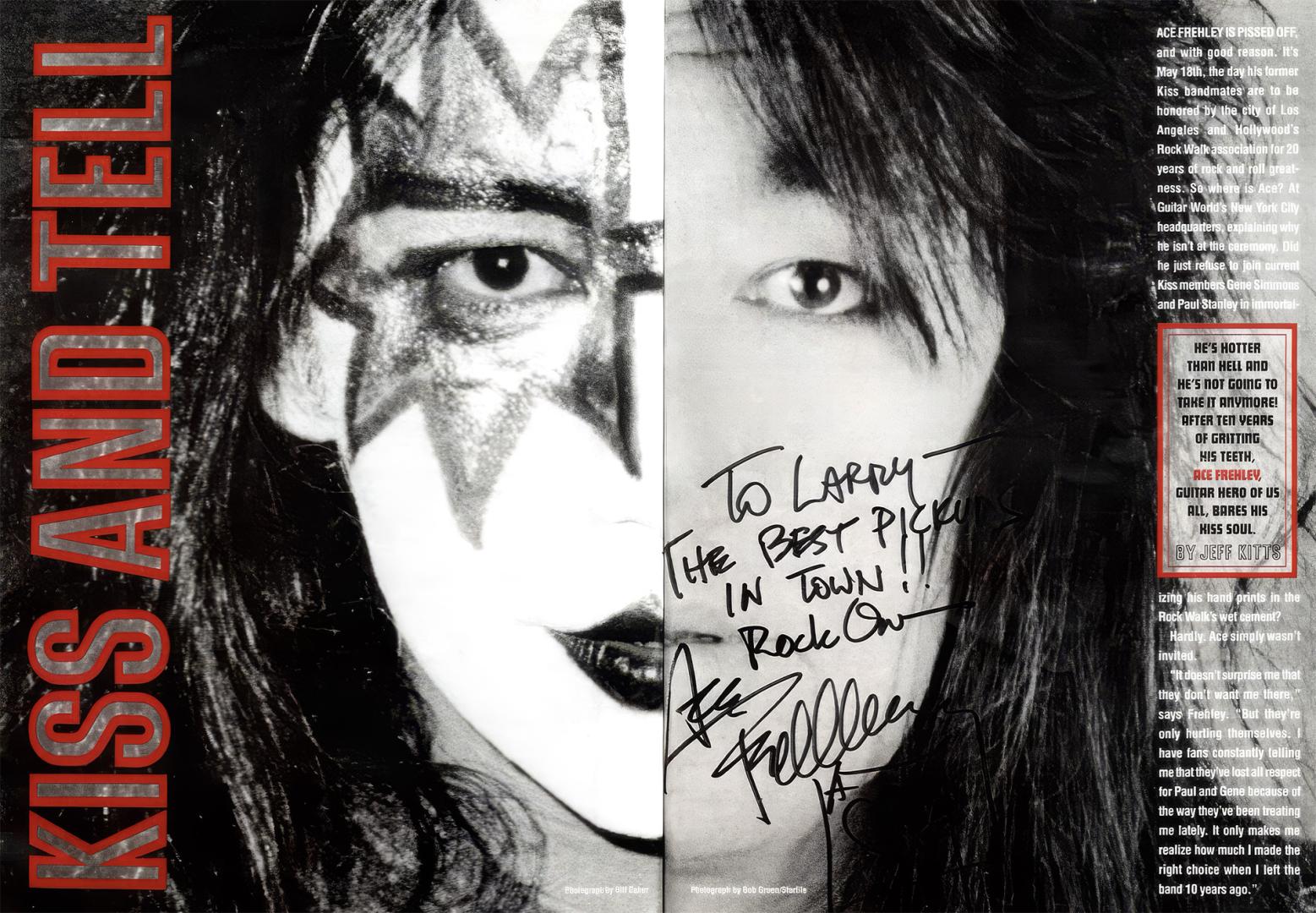
Early in the summer of 2025 I got a text from John Osetrosky, Ace Frehley’s tour manager, telling me that he was expanding his role and was going to handle licensing for Ace. He wanted to know if I thought some Ace signature pickups with DiMarzio would be of interest. I hadn’t been in contact with Ace or John for a while and thought it was a great idea. I texted back, “I’d love to do a signature with Ace”.
I’ve made Ace’s pickups for over fifty years, even before there was a DiMarzio company. All the double cream Super Distortion® pickups during his time with KISS, all the pickups for his Gibson and Epiphone signature guitars (1997 -2001) and we continued to supply Rocco Monterosso, Ace’s tech, with whatever DiMarzio pickups they might be interested in using.
Although I hadn’t seen Ace in several years, he was one of those people where you could pick up wherever you had left off without missing a beat.
I was looking forward to working with him since both he and KISS had been instrumental to DiMarzio’s early success. I owed all of them a debt of gratitude, especially Ace. (See: The Birth of the Super Distortion®) What could be better than brainstorming with someone that I had such a long history with? Ace had a great sense of graphics, invented the smoke bomb guitar and the KISS logo, and he made me laugh my ass off.
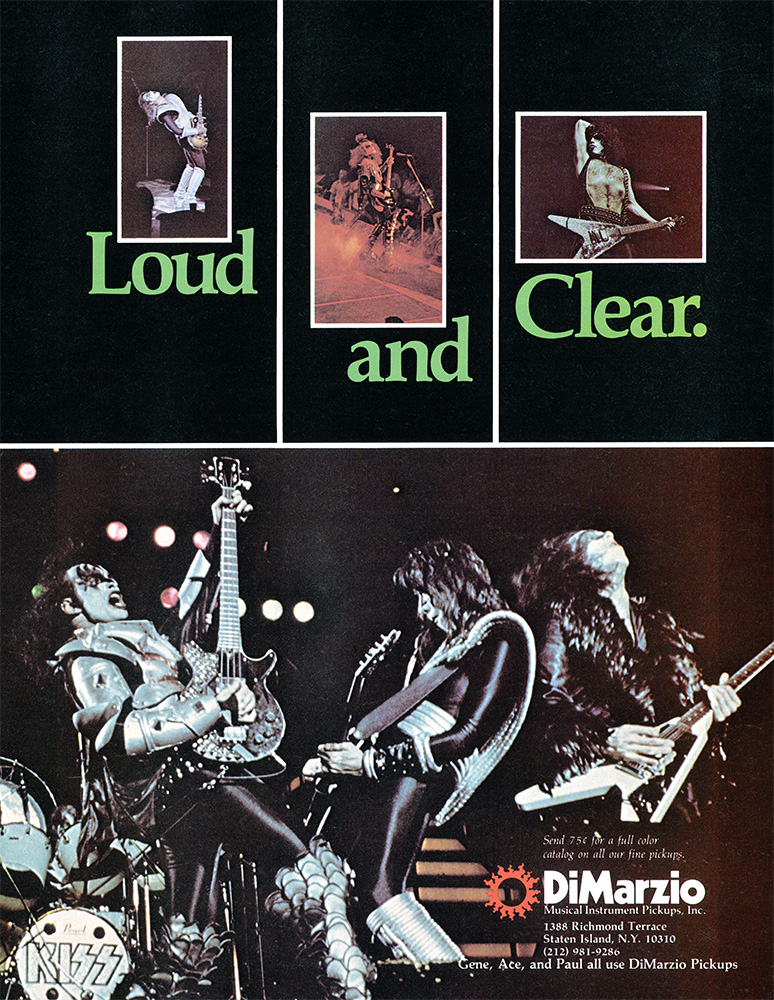
The electric guitar had altered both of our lives in so many ways and DiMarzio was the first company to promote KISS. Our early successes ran in parallel and we were all unconventional upstarts from New York, convinced that things needed to change and… we were going make it happen.
I suggested to John that we combine the pickup project with a photoshoot, a video campaign, and an interview for the DiMarzio website. I also added that I’d be happy to work on any photographic or promotional projects that Ace might want for his album art, press, etc. for free. This would be a “lots of love project”… I didn’t want anything other than to do a good job for Ace because that’s how he treated me.
In all this time that I’ve known Ace, we never managed to do a photo shoot although I had spoken to John about it several times. I was looking forward to photographing him and having him on the opening page of the DiMarzio website. Ace was there at the very beginning and one of the first artists to adopt the Super Distortion® sound.
When I first met Ace, I had already invented the Super Distortion® and was friends with Gene Simmons.
Ace, Earl Slick (David Bowie’s band), Al DiMeola, Rick Derringer and Pete Townshend were all playing Super Distortions® live and recording with them. The demand for my double cream beauties increased every month. In that pre-internet world, sales were driven by word of mouth, the DiMarzio double cream look, and player recommendations as to the sound of the Super Distortion® pickups. The 70s were a magical time for me, the DiMarzio company, and Ace. KISS was exploding and Ace had my double cream pickups in all his Les Paul guitars, bringing even greater worldwide recognition and acceptance for DiMarzio. In March of 1975, I was even invited to Electric Lady Studio for the release party of "Dressed to Kill". What a treat!
Collaborating with Ace now, fine tuning the sound and the look he wanted for his new signature pickups, would have been a dream project.
By end of summer 2025, when I hadn’t heard from Ace or John, I just wrote it off and assumed they’re probably busy, and that we’d get started when they had time. In September, I heard that Ace had fallen and was in the hospital. Then suddenly, in mid-October, the news was everywhere that Ace had passed away.
It’s not like Ace and I spoke all the time; I always respected his privacy. But I liked him, he was a part of my life, and we always got along well. I was looking forward to working with him, and if I knew he needed anything I would certainly have offered to help. As Gene Simmons said, “He was an irreplaceable rock soldier”. For me, he was a guy that achieved his dream as a rock performer and lived that life to the fullest.
I’ve been talking to Rocco (Ace’s guitar tech) since Ace’s passing, and I felt that writing this article would help me feel a little bit better. We could both share some stories, history, and Ace’s kindness to both of us. I’m going to miss him, and I hope this article adds to his memory. It’s been a year since his death and I still haven’t been able to delete his number from my cell phone.
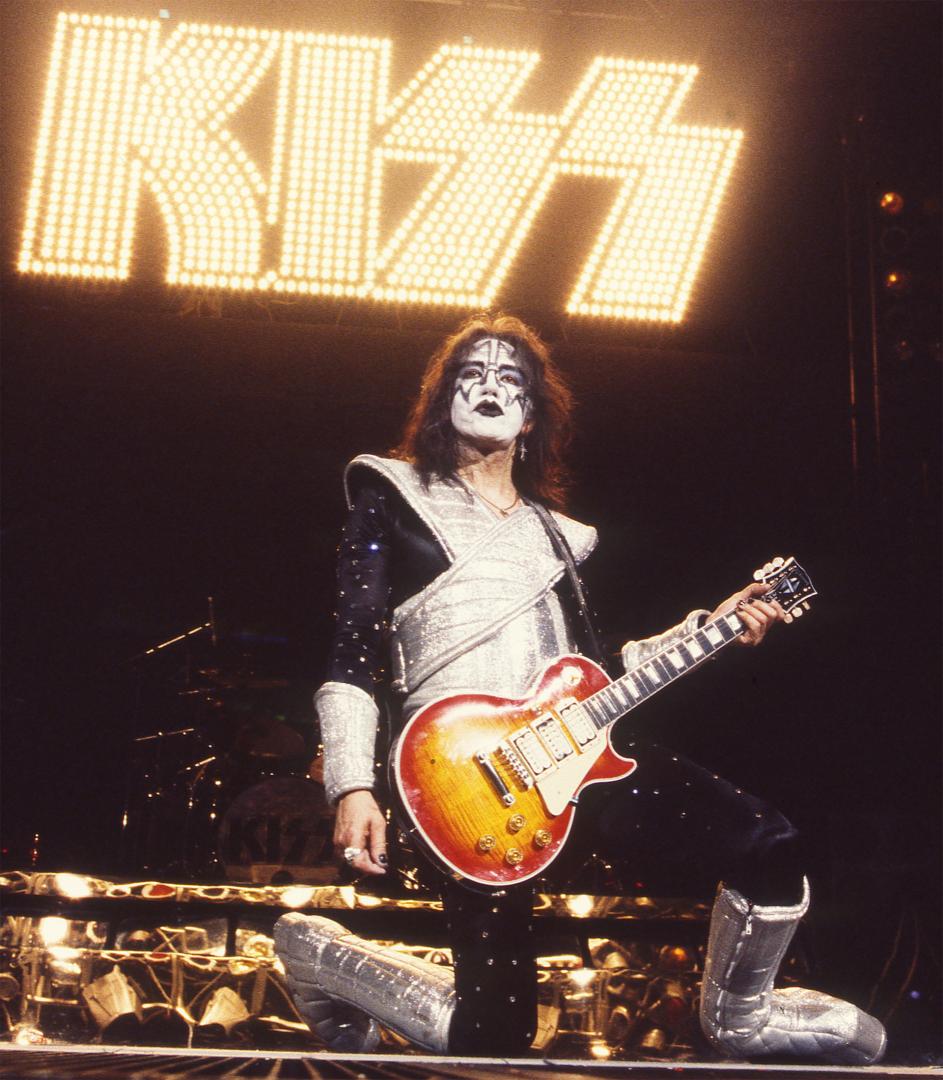
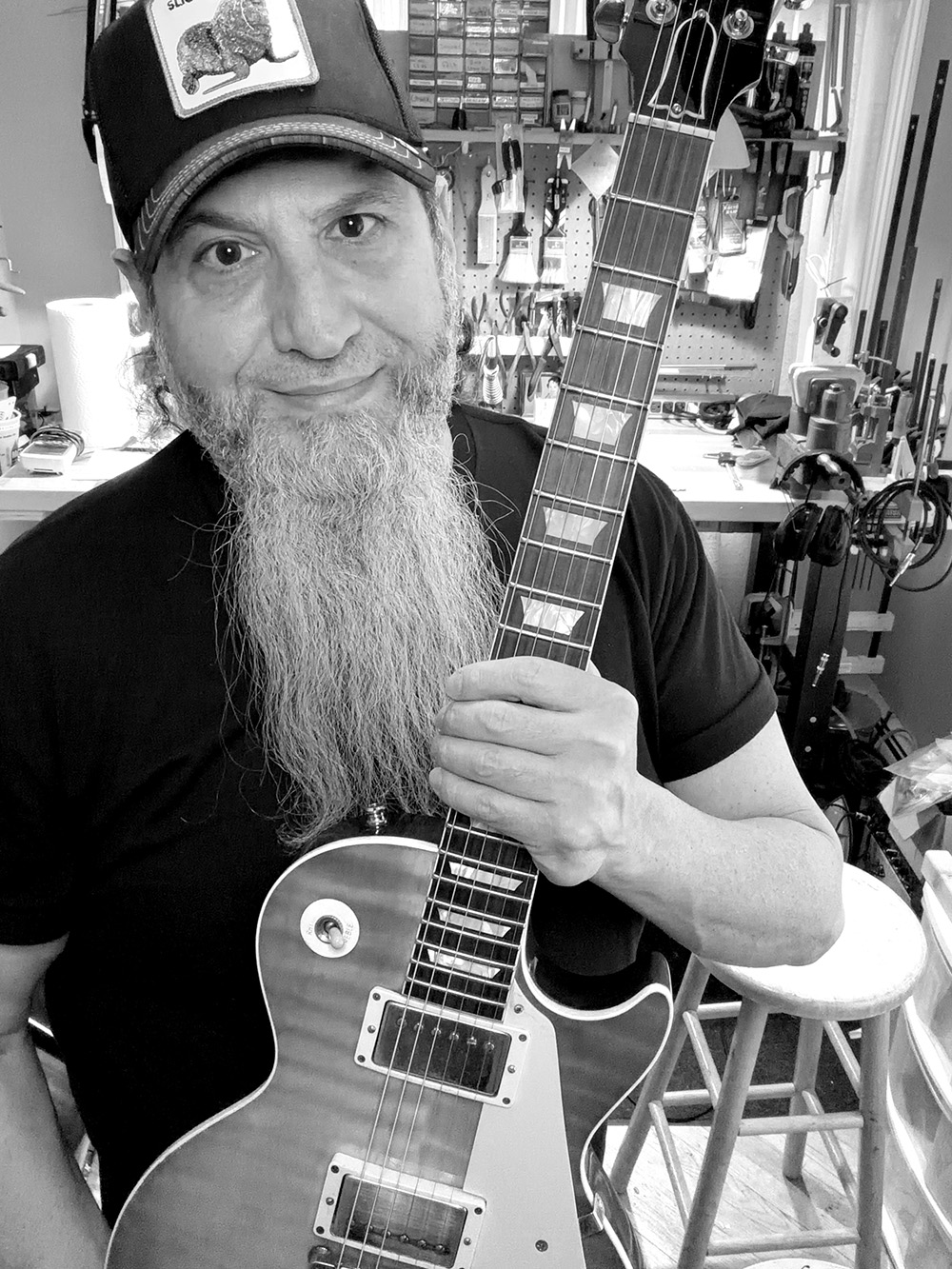
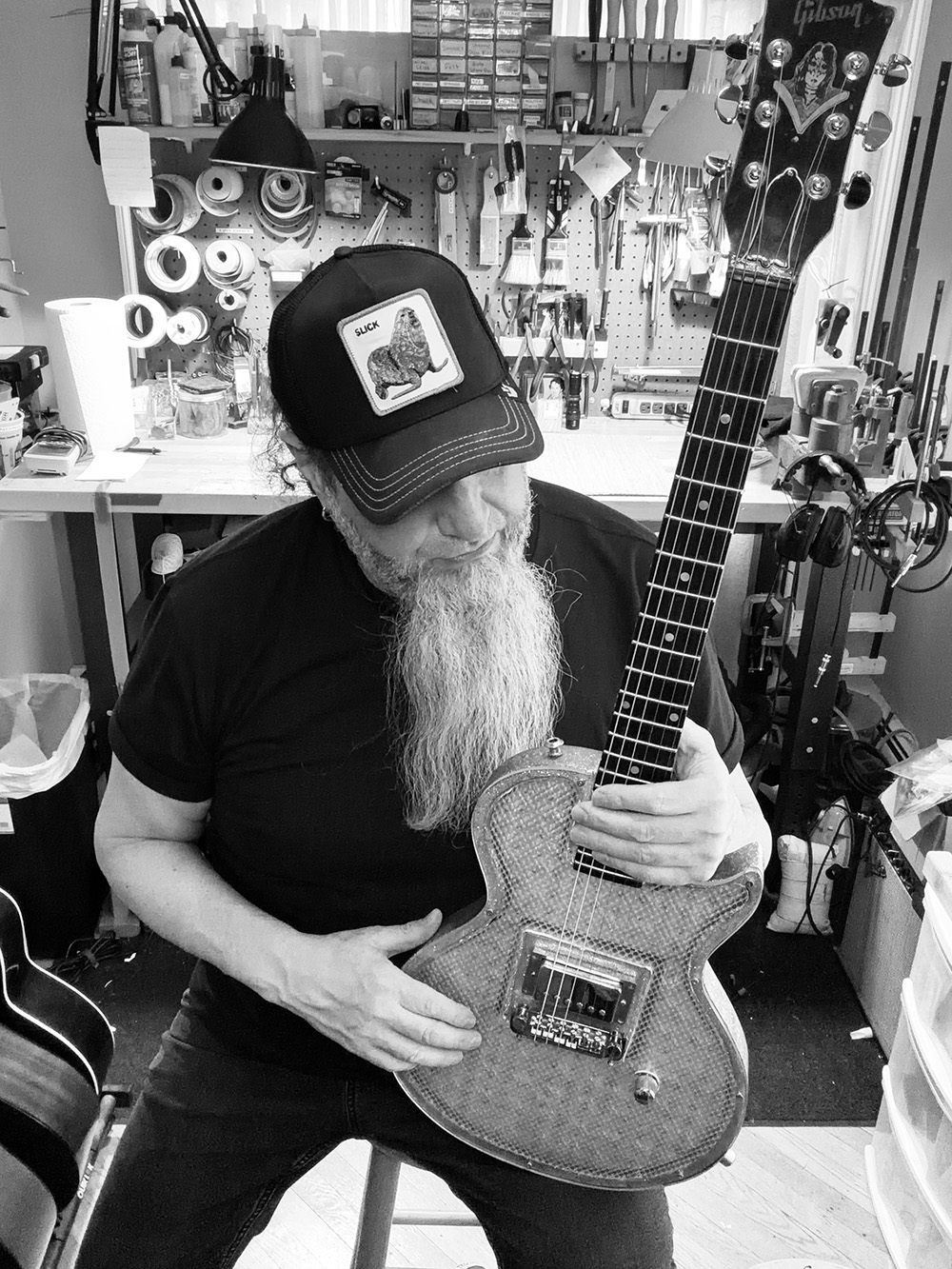
Rocco Monterosso had a first-hand view of the last 18 years of Ace’s sound, playing, and career — from the perspective of someone that was there at the side of the stage handing him his guitars, doing his sound checks, stage managing, and occasionally filling in for band members.
Larry DiMarzio: Hi Rocco. Thank you taking the time to talk with me. You worked with Ace for a long time. Tell me about what that was like.
Rocco Monterosso: Being with someone as long as I've been with Ace, and I'm sure there’s guys who've worked for their bosses longer than me, I had a very good 18 years with him. I acknowledged he's the guitar legend that he is and all that, but for me, he was my friend, and that meant more to me than the fact that he was this guitar guru.
Larry: He wasn't just the boss?
Rocco: He was always good to me. We've done a lot together. I've seen the world because of him, I can guarantee you I wouldn't have gotten on a plane to see Australia and New Zealand otherwise. And, thankfully for him, I was able to see a lot of these places and share the experiences of how people loved him, not just in the US, but globally. So, that was a great experience, and I took a lot of things away with me. Just being able to work with someone like him, he was always a funny guy and always, always cracking jokes.
Larry: He was very funny; I always thought he should do stand-up.
Rocco: He was a funny guy. I mean, I think sobriety kind of slowed him down a little bit, but that was a good thing, though, him being sober. I came in when he was about a year sober and he continued his sobriety. So, I got the more focused Ace, which I'm grateful for.
Larry: Back his wilder KISS days, I’d run into him in some club in New York and Ace was always Ace. You’d get a big smile, he’d crack a joke, and then that signature laugh. He stayed real and genuine even during the peak of his popularity with KISS. He was a good guy and was always very kind to me. When KISS started, everyone in the band was using my pickups and they talked about DiMarzio in their interviews and articles. Ace was especially important to the early success of the double cream Super Distortions®, and he never asked for anything in return – nothing. No royalties, no commissions, just a few pickups occasionally.
I‘ve heard that he was always good to his crew as well.
Rocco: Yes absolutely. On an early tour, we were in Cologne, Germany and he texted me, "Hey, let's go out for a walk around Germany.” We wound up near the cathedral, and the next thing you know, he's buying me ice cream and a t-shirt. I know that sounds simplistic but I'm walking around Cologne, Germany with this guy who's a guitar legend that I've only known for a few short months.
It meant a lot to me, and I had a great time. Ace and I were always in communication. Sometimes you’d just get a text or phone call, wishing us happy holidays or a happy birthday.
Larry: I heard that he liked hanging out with crew during the tours.
Rocco: He enjoyed being around the guys in his band and doing the hang. One time, we were on tour and Ace asked us if we wanted to play cards. So, we all said “Sure we'll play poker with you.” We stopped the bus at either a Walmart or Target, and Ace bought a poker table. It was so funny because the table wouldn't fit on the bus. We were all sitting on the side couches with the poker table sitting in our laps because we couldn't get the legs to fit in the aisle.
Then, Ace wiped us all out in about a half an hour.
Larry: (Laughing) I guess that means you shouldn’t play poker with a guy named Ace.
Rocco: Another time, we played the St. George Theatre in Staten Island, and it was right around my birthday. He called me up to do “Cold Gin.” So, I played guitar with him in my hometown, and we did “Cold Gin” together, and he even gave me a solo spot which I wasn't expecting. He was just kind of like pointing to me and I was like, “Oh, alright.”
Larry: Ace was always thoughtful. I heard you play at soundcheck for Rockin’ the Rivers here in Montana and you sounded great. I thought it was Ace until I looked over and it was you.
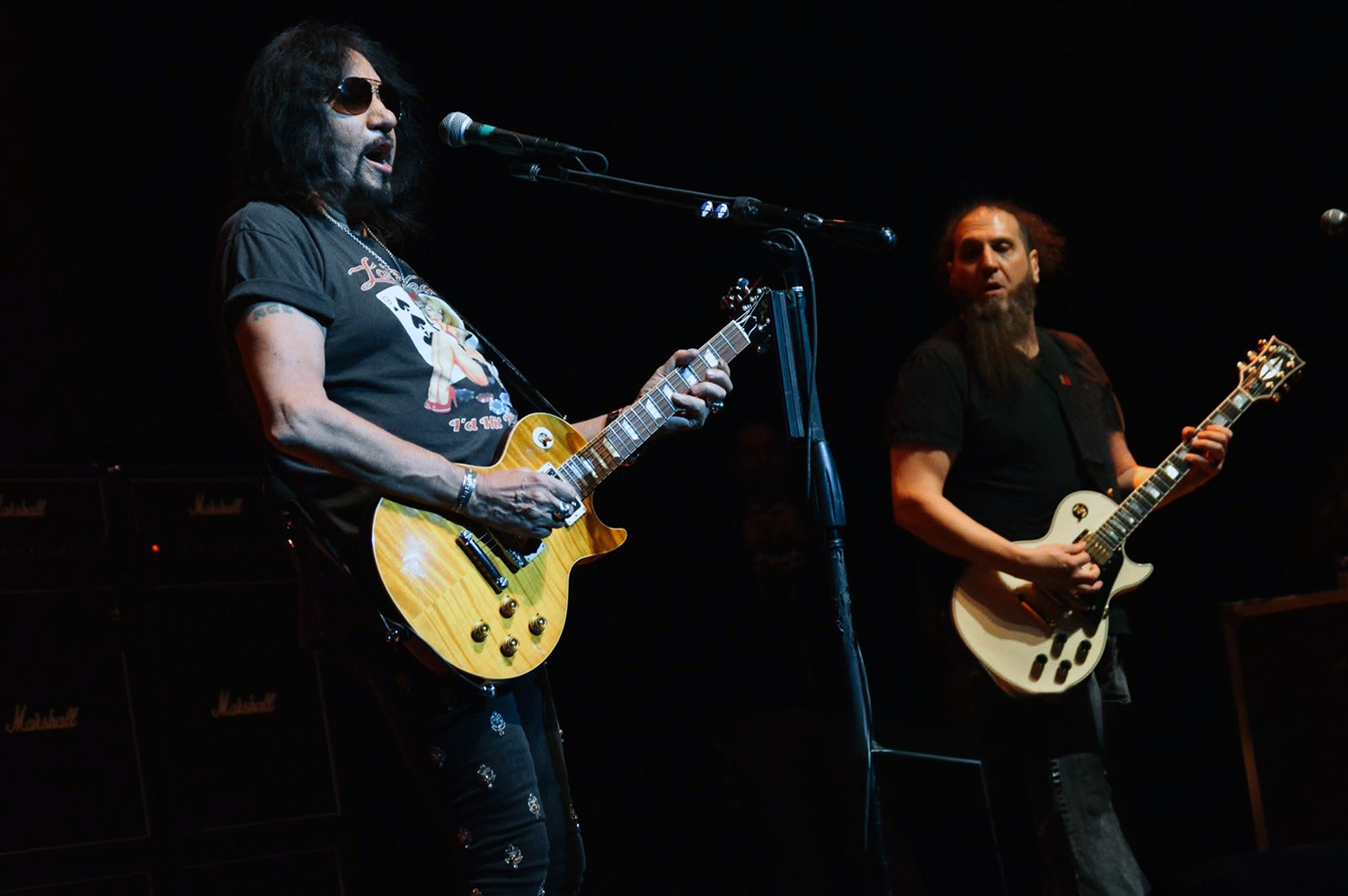
Rocco: Thanks, man. I appreciate that. That was one of the highlights of being with him for so long, being able to play with him and to share that experience. It was great. I really loved it.
Larry: So while you were working with him, were you still working at Mandolin Brothers? Would you just go out on the road periodically?
Rocco: Yeah, I got on with Ace in the beginning of 2008. I had left Mando in 2015. So, I was with Mando and working with Ace for about 7 years. Stan (Mandolin Brother’s owner) and Leroy (the shop manager at the time,) they were cool with me going out. To Stan, it was like, “Oh yeah, you're going out with Ace? Really great."
I was fortunate enough to be able to hold my job and still work with Ace. I think, honestly, if my job had been in jeopardy at Mando because of me touring with Ace, I don't think I would have went out with him. I was more of a house tech than a road tech, and that's what I really enjoyed doing more than being out on the road. The road experience was great and I loved it. I saw so many things and places, and I got to meet many people on the road.
Larry: You and I have some parallel Staten Island history. When the Mandolin Brothers first opened (around 1971), I did their repairs. Hap would drop off vintage Martin and Gibson acoustic guitars, and I worked out of my girlfriend’s apartment on St. Mark’s Place in St. George. Hap Kuffner and Stan had an upstairs room on Bay Street. Funny enough, Gene had asked me to tech for the first KISS tour. So, I was almost one of their techs as well. I told Gene I couldn’t but… “I got a guy”.
Rocco: Yeah, we all got a guy, right?
Larry: Especially if you’re from New York. I introduced Gene to Tommy Morengello, another Staten Island guy, and he got the job.
When did you start at Mandolin Brothers?
Rocco: I started at Mandos in 1996 and I left in 2015-ish. Somewhere around there.
Larry: Staten Island was a very guitar player friendly place. I noticed in your interview with Vintage Guitar magazine that you mentioned doing a lot of work on old Martins.
Rocco: When I first started at Mando, I didn't really have much experience with acoustic guitars. I barely even played an acoustic. I've always been predominantly an electric player, but as you know, when I started working there, I had been introduced to an entire world of completely different instruments — and different music too. Growing up, I was a rock guy. I played, that's what I did. But when I started working there, it was a world of bluegrass, jazz, and other genres of music that I wasn't really listening to. So, I was thinking I was going to work on a lot of electrics, but as it turns out, the ratio was the other way around. I was working predominantly on acoustic guitars, much more than electrics.
I worked on electrics, but if I had worked at a Guitar Center or Sam Ash, I probably wouldn't have worked on as many acoustics, and certainly not the caliber of acoustics that I was working on. I was working on pre-war Martins and Gibsons, parlor guitars, mandolins. I'm sure I wouldn't have seen that had I worked somewhere else. It was an entire world of interesting and beautiful instruments, and then you had arch tops too, like D'Angelico, D’Acquisto, and stuff like that. All these private builders and makers. Also, just the fact that I wasn't really a road tech, I was an in-house tech. Road teching is a lot different than being a house tech.
Larry: When we met in Montana, were you playing in the band and guitar teching?
Rocco: No, I wasn't playing with him, but 95% of the time I would do sound checks for Ace.
Larry: I remember Ace was rehearsing at a small venue, “Live from the Divide” and you were playing. I thought you were in the band.
Rocco: I have played with Ace. I've probably done more than two handfuls of gigs filling in for members of his band that couldn’t make it for whatever reason. I've played guitar, and I've played bass. So, I've done a good number of gigs with him over the years, which was an awesome experience. Playing with a legend on stage, it really was cool.
Larry: What was Ace’s go to setup for the live shows?
Rocco: Always a Marshall. We've used Marshall JCM 900s, and we've used Marshall JCM 2000s. This is when I was with him. Before I was with him, I know he'd used Laney's too.
He also used Marshall Super Leads back in the early days. For the most part, over the past ten years or more, we've used predominantly Marshall JCM 2000s. As far as his effects, I laugh because Ace was not much of an effects guy at all. He did use a digital delay for certain songs, his unaccompanied solo, maybe “Detroit Rock City”. The only other thing that we added over the past couple of years is an overdrive pedal. Sometimes when we would do gigs on the road, the past five to ten years anyway, we would use a rental back line. As you know, rental back lines are…
Larry: Questionable…
Rocco: It’s either going to be good or they're going to be bad. So, you have to just roll with what you have. And sometimes these heads would be biased cold, and I'd have to put an overdrive pedal in front just to get a little bit more sustain out of it.
Larry: Were there any other pedals or EQs?
Rocco: No just the overdrive. The only other thing we used was the wireless, but that's it. His rig wasn't all that crazy.
Larry: My experience with Ace was he always got his sound. It was always going to be a Les Paul with DiMarzio pickups into a Marshall. I don't think I ever saw him use anything other than a Les Paul & DiMarzio combo.
Rocco: Yeah, in my tenure with him, that's always what we used.
Larry: What were his favorite go-to guitars for the road? And of course, what were the pickups?
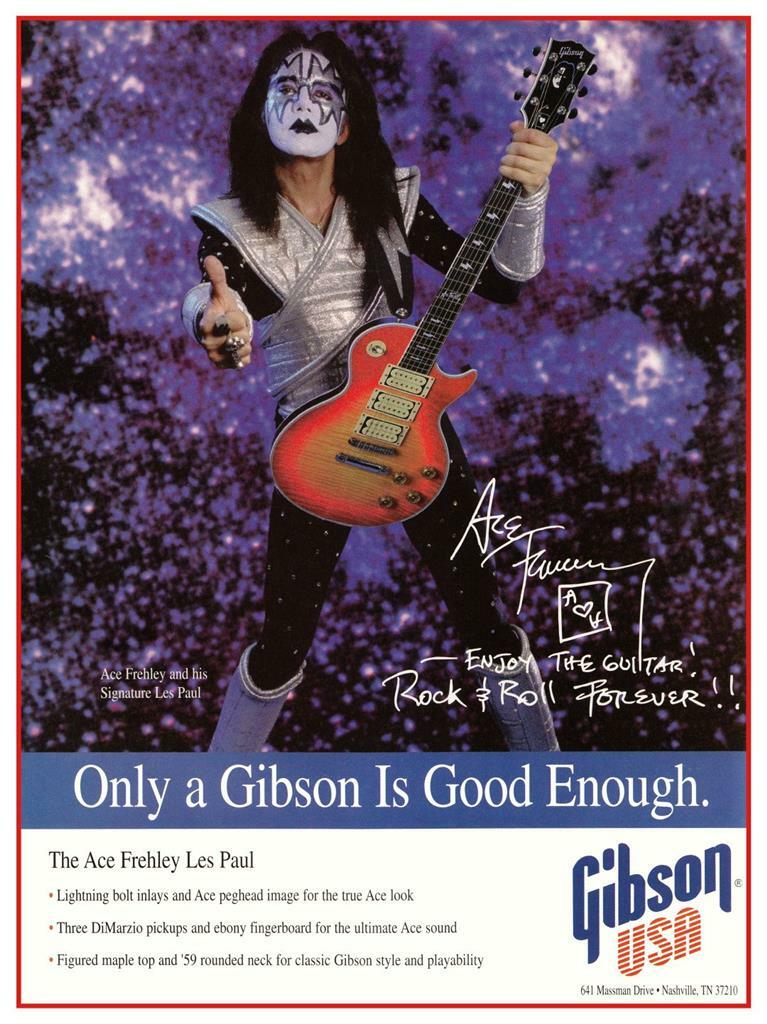
Rocco: Gibson made a run of guitars for Ace, the signature Les Paul standards or bursts. They were spec’d after one of his 59s that he had a while ago. I couldn't tell you exactly which one it was, but they made a bunch for him.
Those were his main guitars over the past eight to ten years. On the back of the headstocks, they all have a number etched in with a Sharpie or whatever. So, they were exclusively his, and that's what he used predominantly.
Larry: How many guitars were there?
Rocco: If my memory serves me correctly, they made eleven of them for him. And they all had different things. I should say that they all had different patinas. Some were kind of worn, some of them were new looking. They were all bursts of course, but they all had a different level of wear to them, relics or whatever you want to call it. For the pickups, we've gone through different models. All DiMarzio, of course. I know a lot of people associate Ace with the Super Distortion®, but he used other DiMarzio pickups too. We used Air Zones™ for a little while, and then we started using Tone Zones®. That was the last model that we were using.
Larry: Did those have covers?
Rocco: Yes.
Larry: I wasn’t sure which DiMarzio’s he was using recently and it’s good to confirm that they were all DiMarzio’s with covers. When you say Gibson made him Les Pauls, they were based on one of his original 1959 Les Pauls?
Rocco: Yes, I believe so.
Larry: I was curious which original guitar was copied?
Rocco: I don't know. He didn't have a bunch of bursts, but I know that he had one or two of them and that's what they used. You know, someone owns them now. Maybe Gibson was able to get one and use it as the example.
Larry: Did Ace spec out weights or any other special details for his Les Pauls?
Rocco: No, he wasn't that technical. I mean, he didn't like low action. He liked jumbo frets. Most of his guitars were fretted with Dunlop 6000 wire, which is a big wire. So, I know he liked that. When I first got on board with him, he used a hybrid 52 to 10 set, which is pretty heavy, at least for me.
Larry: That’s good to know. So, his guitars were built with the Dunlop wire.
Rocco: Eventually we started going from that hybrid set to straight 10s, then to 9.5s, and later to 9s. Over the past six years or so, he started tuning down a whole step. I know that sounds like a lot, but in Ace’s world, he was only tuned down a half step more than he was used to. He was normally tuned down a half step, especially for the old KISS stuff.
It wasn't that drastic of a drop, but a whole step down on 9’s is pretty slinky. Oh, and he liked the top wrapped setup.
Larry: So, you put the strings through the tailpiece, then over the top, and then to the bridge?
Rocco: Exactly, yeah. You could blow on the strings and they’d move.
Larry: I didn’t know that he did that. Did he do that to change the tension?
Rocco: Yeah.
Larry: How would you describe Ace’s Sound? You've been around it and you were there live.
Rocco: Yeah, we were always striving for a full-bodied sound without sounding too muddled or flubby. That's why we loved using the Tone Zone®. It just had that tight low end that we were looking for. Whenever we would play live, we were all at the mercy of these rentals, but more times than not, we always got a great sound. The DiMarzio pickups made a huge difference, and even for myself, I love Gibsons and I'm a Gibson player, but I prefer DiMarzio pickups over Gibson pickups. And so did Ace. I mean, you were the first guys.
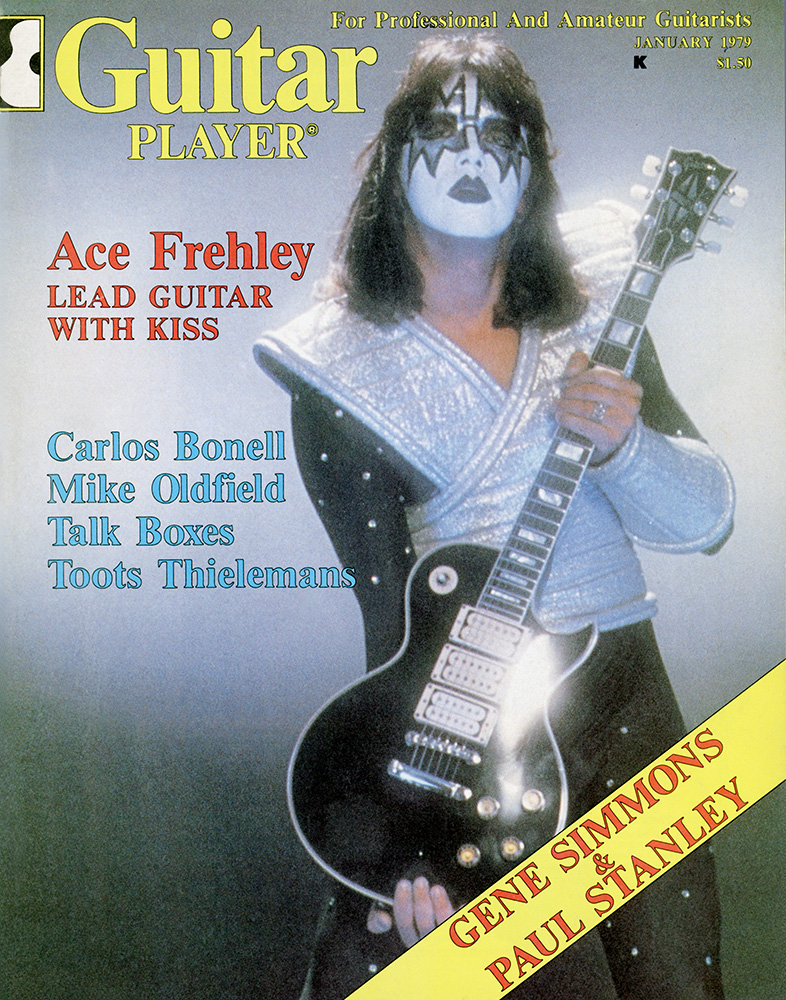
Larry: Absolutely. I just found an old Guitar Player Magazine with Ace on the cover from 1979. Guitar Player interviewed everyone in KISS, and Gene, Ace, and Paul all mentioned DiMarzio in their interviews… it was great to see that again. Here's an excerpt:
What kind of pickups are on your Ibanez?
Paul Stanley: “I've been going back and forth. Ibanez just made a couple of new ones, because I wasn't happy with the earliest pickups-they didn't cut it. DiMarzio custom-winds pickups for me; I like them very much. I don't go for Super Distortion®. I think the sound of the Gibson patent-applied-for pick up has a lot more character to it. I mean, if you want the distortion, you can turn your amp up. You don't need it out of the pickup. Actually, though, in a way there's no such thing as a "patent-applied-for" sound; one's as different from another as night and day. My DiMarzios are like patent-applied-fors, but a little hotter.”
How long did you use that bass?
Gene Simmons: “For about four years, until one night I threw it to my roadie. At the end of our show I walk offstage and I throw the guitar off the stage, and everyone gasps. That one night he dropped it and the neck broke in half. I just had a guy named Stuart Spector build me one with a longer neck. The body is completely original but based on the concept of an old Gibson Melody Maker. It has a twin horn, small body, with one DiMarzio pickup. I've used it on all the albums from Love Gun through Alive 2. Larry DiMarzio and I went to school together. At the same time, I was telling him about this great band I was putting together and that we were going to be superstars, he was telling me about this great pickup he was developing and that it was going to make him a superstar. We both thought that each other was full of shit, but we obviously have come to a point where we can say, "Hey, we were both right."”
Have your guitars been modified?
Ace Frehley: “Yes, I put DiMarzio pickups on the Gibsons. About a year and a half ago I started using three pickups on all my guitars on-stage. There are two reasons for that: One, you get a little more variety in tone, and second, it looks cool. I like DiMarzio's Super Distortion® humbucking pickup. It's really good for getting a ballsy sound.”
Rocco:Wow. I always worked so closely with Ace, I never really thought about Gene and Paul also using DiMarzio. For whatever reason, my association of DiMarzio and KISS was with Ace and not so much with Paul and Gene. I always forget that they used DiMarzio too.
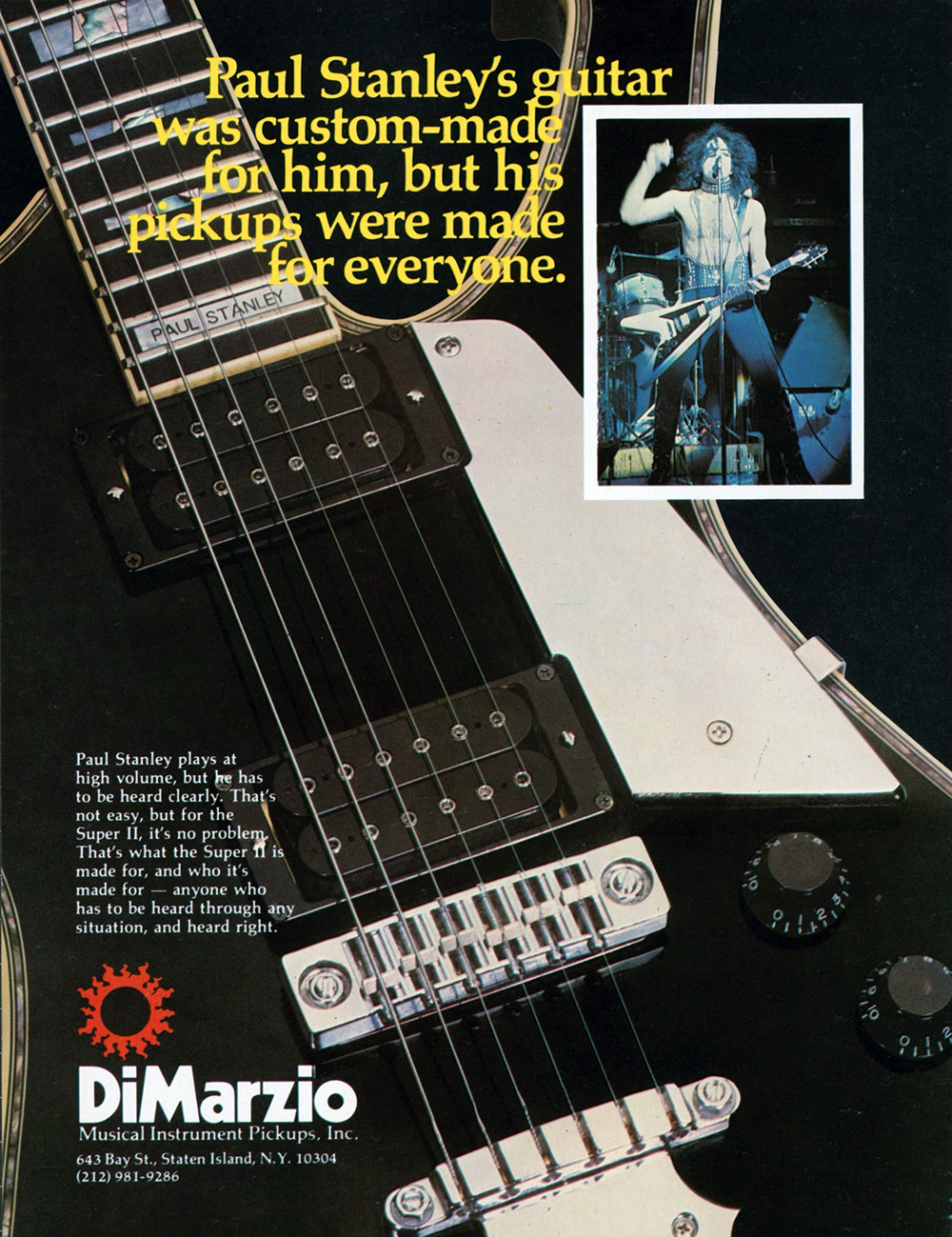
Larry: Check out the “Loud and clear” ad (see above). To put things into perspective, DiMarzio was a part of the early KISS sound and look. Ace liked the DiMarzio pickups so much that he sent a limo to drive Steve Blucher to their rehearsal, so he could install Super Distortions® in Ace’s black Les Paul.
Gene’s comment about us going to school together has a bit more to it. We met in the cafeteria at Staten Island Community College. Gene was playing and singing, and I had my guitar with me. So, I asked him if I could back him up. We never had any classes together, but sometimes we would meet up and play together at the school. For about a year and a half we’d meet at the end of the day and ride the subway back to Queens together. He was great company and we almost had a band. There are some recordings somewhere that I made with him in the basement of my mother’s house.
At time of the Guitar Player article, Gene was using my Model One pickup on his bass. That was my replacement for the large Gibson EBO pickup. We worked with Paul Stanley to get his sound right for KISS, and the Super 2 worked better for him. He wanted a brighter tone to help separate him from Ace’s sound. Funny enough, about a year ago, I started working with Paul’s son Evan. He’s using our DiMarzio Vintage Minibuckers in his guitar now.
Rocco: Oh wow, nice. Evan’s a great player.
Larry: I'm loving the new Stanley Simmons band. It’s great to see Paul and Gene’s sons playing together, and I get to play my small part in another generation of guitar sound.
Rocco: Yeah, for sure. Well, I’ll tell you a side note. Due to the inconsistency with rental companies, Ace went to a modeler for a very short stint. On a side note, since we were talking about rental companies, Ace went to a modeler for a very short stint due to inconsistencies. He liked it, but he was just like, “Nah, give me back my Marshalls.” I said “Alright” and we moved on. The thing with the modelers is that there was way more consistency. It didn't matter how bad or good the amp sounded. If we had a decent power section, then we got closer to Ace’s sound. I thought the modeler sounded really good, but Ace was definitely old school.
Larry: Me too, I want to be comfortable with the sound right out of the gate.
Rocco: Not to sound redundant, but that was really the biggest tug of war with the live gigs…just hoping that we got a backline company that gave a crap about their equipment. When we brought our own stuff, it was great because I maintained his amps. I was always on top of it.
Larry: Was Ace living on the East Coast?
Rocco: He was living in San Diego for a long time, then to New Jersey.
Larry: I was wondering because he was friends with John 5, and I had seen photos of him with Ace and I was curious.
Rocco: Yeah, I couldn't tell you exactly how long, but he was living in San Diego for well over seven or eight years. Prior to that, Ace was always an East Coast guy. I mean, that was his home. The Jersey thing was a new venture for him.
Larry: I always think of him as a New York guy.
Rocco: Yeah, he predominantly lived upstate.
Larry: I remember being invited to his house back in the early ‘80s. I was trying to learn about computers. Desk top publishing was taking off, and I had no idea where to start. I think it was Steve Blucher that told me Ace was a computer whiz. I called him and drove somewhere upstate New York. I wanted to do in-house ad production, and I wasn’t getting any straight answers from vendors.
I walked into his computer room, and he had an 8’ projection screen mounted to the wall, like a home theater. He was morphing his face into Marilyn Monroe’s face; it was really funny. He showed me how he was doing it, and the software he was using. Needless to say, this was far beyond anything that I wanted to do. All I wanted to do was design print ads and catalogues for the company, and I needed to find out which computer systems and software would work best. Happily, I got my first computer lesson from Ace Frehley.
He recommended that I get an Apple computer (great call), Adobe Photoshop, and Quark Express software. I was off to the races. He was very encouraging and I called him a few times when I’d get stuck.
Rocco: Yeah, guitar wise, he wasn't into the modern thing, but when it came to computers and messing around with graphics, that was all him. He designed most of our backdrops, and even his own record covers. I know he had a hand in the covers, anyway. Ace always liked to be involved with the artistic side.
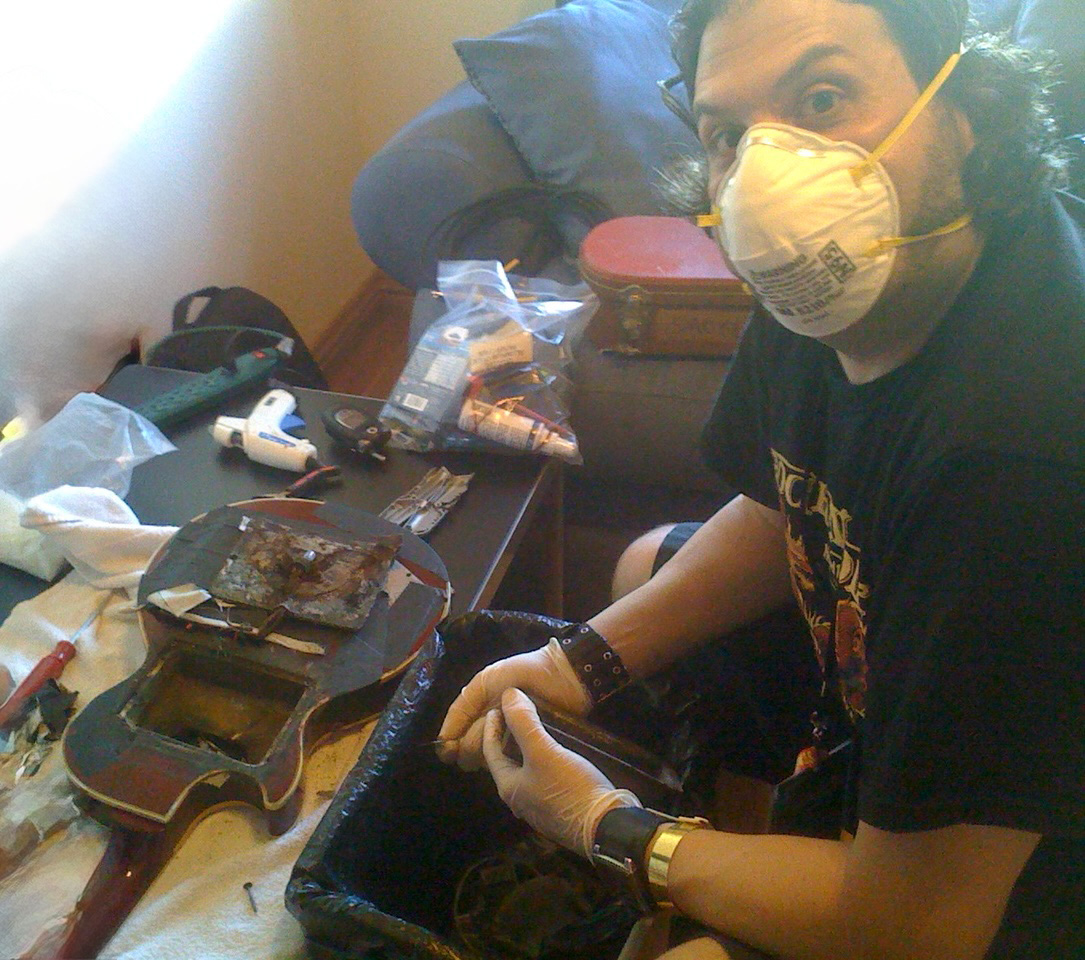
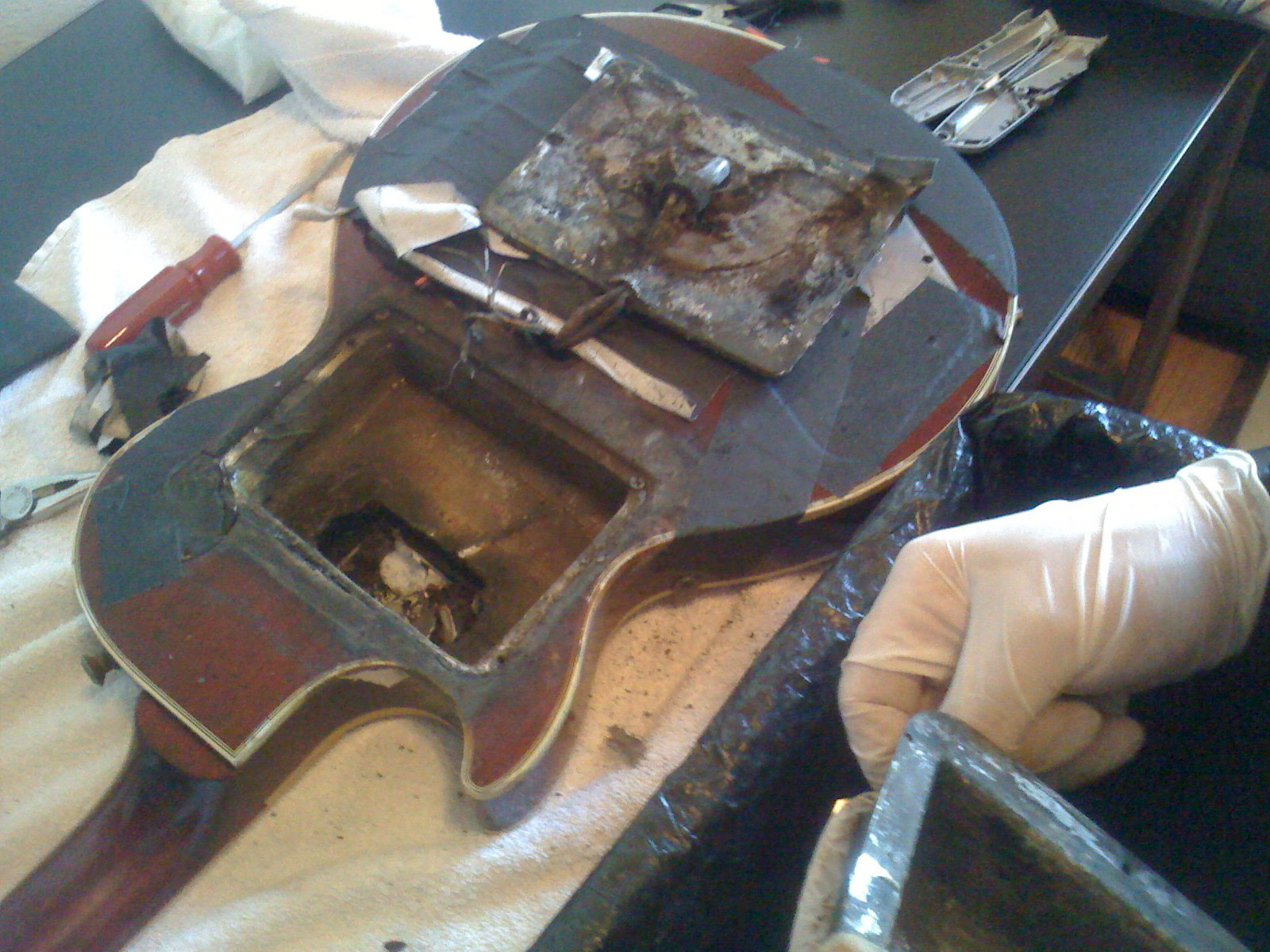
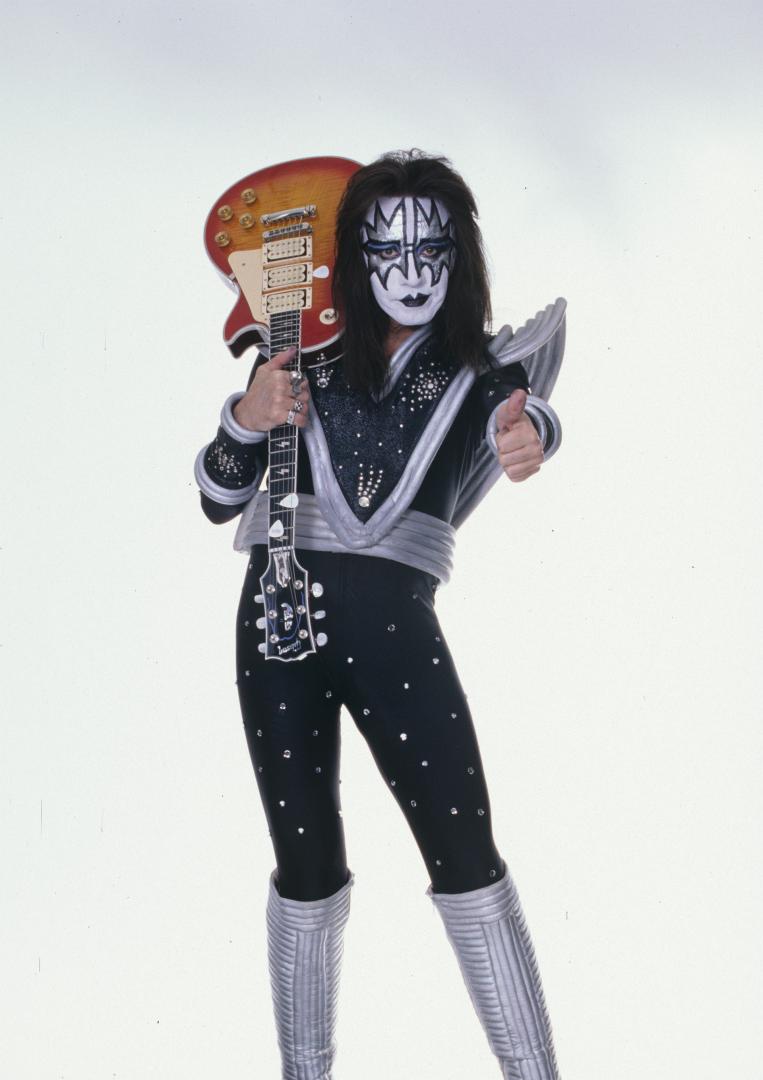
Larry: Even his Gibson Signature Les Paul (1997 – 2001) had cool add-ons. His face in KISS makeup on the headstock, lightning bolt fingerboard inlays, a cherry sunburst finish, gold speed knobs and DiMarzio double cream pickups in all three positions, it looked great. I was looking forward to working with him and seeing what we could come up with together, it would have been such fun.
Rocco: I love the double cream look, I’ve got them in all my guitars too. It was interesting when we replaced the Gibson pickup with the covered DiMarzio. I had thought about double cream, but he grew to like the way the guitar looked with covers. So, I said, “Alright no big deal, we'll get you a DiMarzio with a cover.” — and that's what we did.
Larry: I still love my double cream look too. Now, are you usually working with Eric Corpus at the DiMarzio office?
Rocco: Yeah, I love Eric. You know, it's funny. I used to see and work with Steve Blucher more often, because I worked at Mandolin Brothers. Steve would come in and he’d grab some pickups from us to use as a reference, or if he needed to pick things apart, he might stop by. So, I’d see Steve all the time. I obviously don't see him much anymore, but we always had a nice relationship.
Larry: Steve's great and still works with the company. He’s been with DiMarzio for over 50 years. We’re still a family business and I’ve been building pickups in Staten Island in the same building, on many of the original machines, since the ‘70s. There are no global investment banking groups pulling my strings… it’s the same team that’s been there for years. I don’t design based on a price point or send my pickups to be made somewhere else because it’s cheaper.
What did Ace like in the studio?
Rocco: I've been to Ace's recording studio a bunch of times, but I wasn't there much for the recording process of his albums. I know he worked with Alex Salzman, and he worked with other producers too. Ace kept it simple. I know he used the JCM 900 for a lot of the recordings, like on “Anomaly”, and stuff like that. Just a Les Paul straight into the amp.
Larry: Were the studio recordings, guitar-wise, any different than the live guitar?
Rocco: No, not really. As far as what he used, it was predominantly a Les Paul. He didn't really dabble much into Strats or Teles. If he did, it might have been for clean parts, maybe for a little bit of coloring or textures, but it was mostly his Les Paul.
A lot of Ace's tone was from his hands. The way he controlled his strings, and his vibrato. A lot of the older players who just predominantly used a Les Paul and a Marshall, they had this incredible control because they were forced to have that control. A Marshall would easily get out of control, and before potted pickups, they had to deal with microphonics and other issues. They were forced to control everything with their hands, not so much with a pedal or other tools. That's why Ace always sounded the way he sounded. I mean, Eddie Van Halen…how do we account for the fact that he used a Super Lead or a plexi with no pedal? Meanwhile, there were probably five to ten other guitar players using the same rig, but they never sounded like Eddie.
Larry: You're absolutely spot on. It’s a feel thing, there's a point where you think to yourself, “That’s it”, and “That's what I’m going for.”
Rocco: Okay, yeah.
Larry: Tell me about John 5 and Ace?
Rocco: I remember we were doing a show at the Saban Theatre in LA, and it just so happens that Gene Simmons and John 5 both came to the show that night to see Ace play.
Larry: Oh, damn. I would have loved to be a fly on the wall for that one.
Rocco: I have to say, that was probably one of the best shows Ace had ever played on. He was just…it was like those hints of old Ace and he totally kicked ass.
I was in my guitar tech world and doing my thing, and I didn’t even realize that Gene was only a few feet behind me, watching from the side of the stage with John 5. And I'll never forget this. At one point, Gene leaned over. I'm just looking out, making sure everything's good with Ace, and Gene spoke in my ear…He just said, “Ace Fucking Frehley.” I looked back, and I was like, “Yeah, that's Ace, man. He's totally kicking ass.”
Larry: That’s a great story.
Rocco: Yeah, there's always the stories, right? He did this, they did that, blah, blah, blah, but I believe that Gene loved Ace.
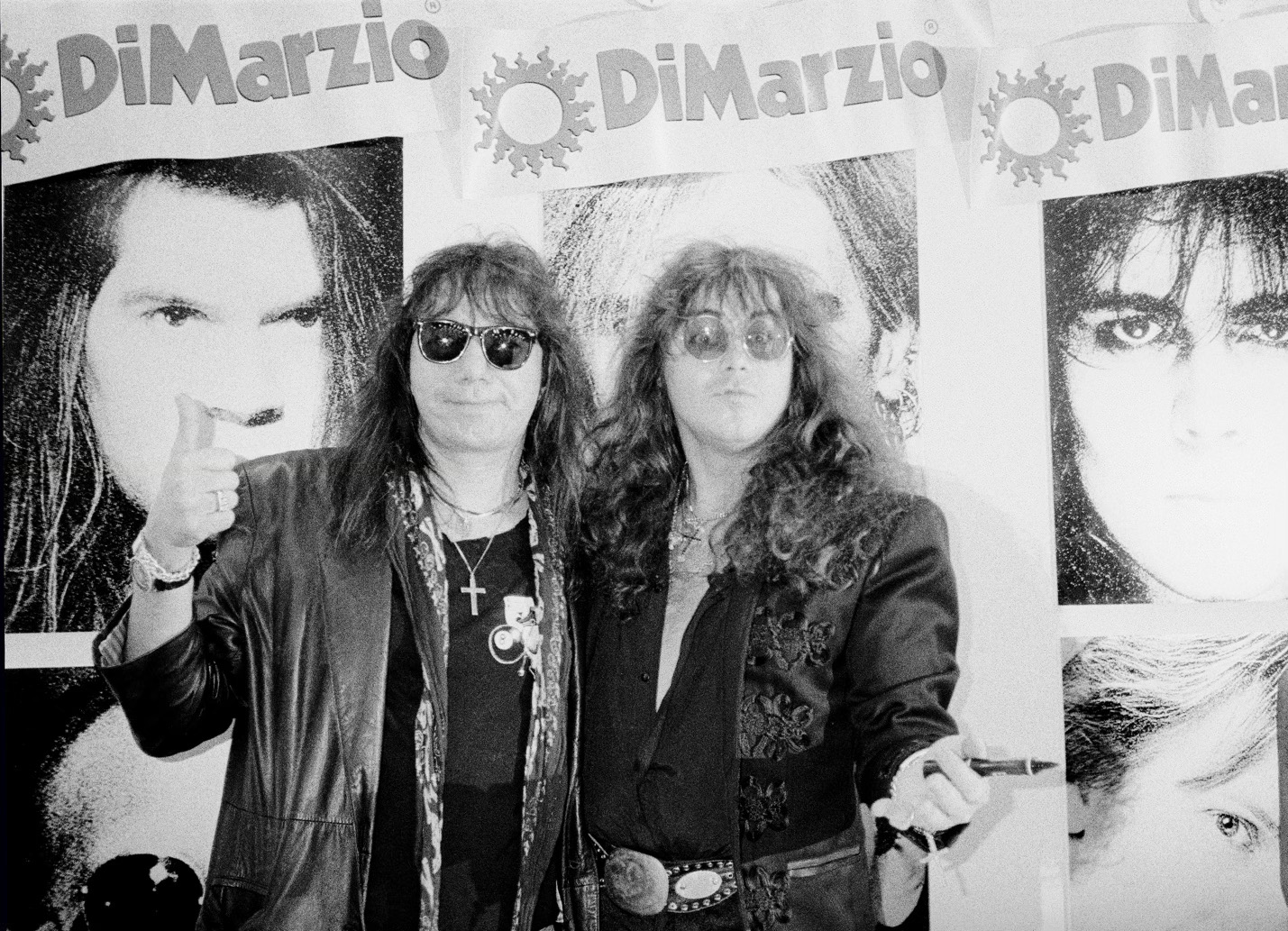
Larry: Ace came to a few trade shows over the years and he would always stop by the DiMarzio booth to say hi and he was always bigger than life.
Rocco: Yeah, absolutely.
Larry: I think something happens to you when you’ve played in front of a million people, done hundreds of interviews, and partied the way Ace did. It probably alters your molecular structure.
Rocco: Yeah, pretty much. He commanded a lot of shows. When we would play South America, wow…I got a little frightened by it. I'm not going to even lie. They're like yelling the lyrics like it was a soccer game. And man, at one point Ace was kind of doing this “Okay, okay, calm down” gesture to the crowd. I was like, man…
Larry: The solo band?
Rocco: Yeah, with his solo band. I mean, I never worked with Ace when he was with KISS. I would say that there were times where I thought “maybe”, because if he was with KISS, if he had gotten his gig back or whatever, he would have asked me to come along to be his tech. I more than likely would have done it, but it never came to be.
When Ace passed, just the way it happened was a hard pill to swallow. But like I said, I feel very fortunate and blessed to have been part of his life and to have him be part of my life for as long as he was. I walk away with a lot of great memories.
Larry: I can only imagine.
To all of you Ace fans reading this… if you want or need your guitar setup like Ace Frehley’s, or if you need a vintage Martin setup or repaired... I got a guy. Rocco Monterroso at Red Mountain Guitar Repair: [email protected]
This content is copyrighted and no part can be used without the written permission of Larry DiMarzio.